Here’s the thing about Sydney properties – they’re not all flat. Shocking, right?
If you’ve got any kind of slope going on, you’re probably losing soil, dealing with drainage headaches or just looking at wasted space that could be something better.
A retaining wall creates extra usable space while holding back soil.
A good retaining wall provides more than just usable space – it stops erosion from turning your yard into a mudslide and, yes, it can make your property look about ten times better.
The soil on a sloped property never just stays there nicely. Water runs down with it, taking along the good topsoil until suddenly there is an unsightly mess of exposed roots and patchy grass left behind. Not a good look.
What Are Your Material Options?
You’ve decided that you need a retaining wall. What will it be made of?
Your choices vary depending on your budget, how high you need to build, what your house looks like, and how much maintenance you can be bothered with down the track.
Timber Retaining Walls
Timber is popular for a reason. It’s relatively affordable, looks natural in a garden setting, and is easier to work with than some other options.
Treated pine sleepers are common in Sydney because they are practical and effective.
The catch? Even treated timber eventually rots or gets eaten by termites. You’re looking at maybe twelve years if it’s properly installed.
If you want timber that’ll last longer, hardwood sleepers cost more, but they will outlast pine by a decent margin.
Concrete Sleepers and Blocks
Now we’re talking about something that’ll stick around. Concrete retaining walls are strong, they last ages, and they’re not fussed about weather or bugs.
You can get concrete sleepers that look surprisingly good these days too. Some even mimic the timber look if you’re after that aesthetic without the maintenance.
Concrete blocks are versatile – you can render them, paint them, or leave them as is. They’re particularly good for taller walls because they interlock and provide serious structural strength.
The main downside is the upfront retaining wall cost, but when you factor in that it’ll still be standing there in 50 years, it starts to make more sense.
Natural Stone
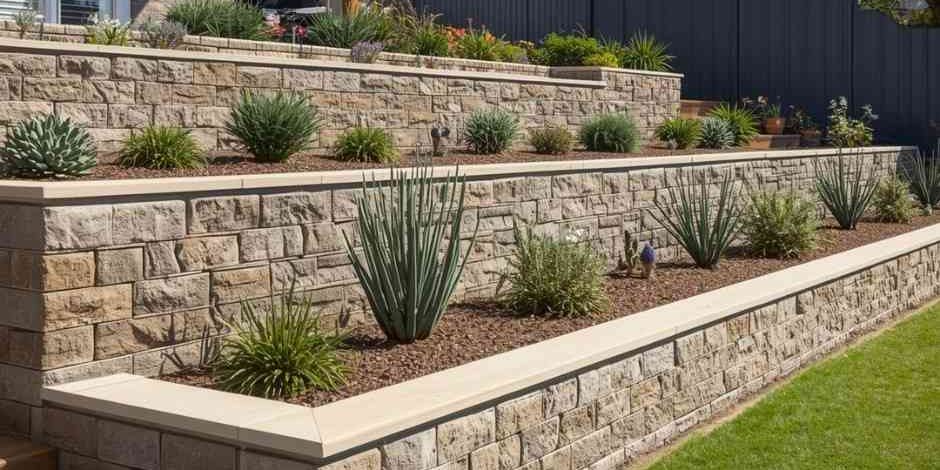
If you want something that looks like it’s always been there, natural stone is difficult to beat. Sandstone, limestone, and bluestone – they all age beautifully. Stone walls can be dry-stacked (no mortar) for a more rustic look or mortared for extra stability.
The dry-stack option is better for drainage too – water can seep through the gaps instead of building up behind the wall.
But be advised that stone is pricey. Both the materials and the labour required for proper installation are expensive.
But if your budget stretches to it, it’s a beautiful option that’ll add real value to your property.
Beyond retaining walls, decorative stones, like river stones and sandstone, can enhance other areas of your garden too. Learn more about creative ways to use decorative stones in your landscaped garden for a cohesive design.
Brick
Brick can work really well for a garden retaining wall, especially if your house is brick. It creates a pleasing visual connection between the house and landscape. You’ll need proper footings and weep holes for drainage, though.
Cost-wise, brick sits somewhere in the middle – not the cheapest but not the most expensive either.
Design Ideas That Actually Work
Alright, materials sorted. Let’s talk about what you can actually do with a retaining wall beyond just “holding back dirt”.
Terraced Gardens
The key here is getting the heights right. Walls between 600mm and 1200mm work well.
Anything higher and you’re getting into engineering territory (literally—you’ll need council approval and engineering specs in NSW for walls over 600 mm).
According to NSW Legal Aid, walls under 600mm don’t need council approval in NSW if they’re at least one metre from boundaries and two metres from other walls. For terraced designs, multiple low walls are often simpler than one tall wall.
Built-in Seating
Why settle for just a wall when you can have one that also serves as a seating area?
If you’re building at the right height – say around 450-500mm – top it off with some wide coping stones or timber, and boom, you’ve got built-in garden seating. Works particularly well around outdoor entertaining areas.
Garden Bed Edges
Not every retaining wall needs to be a major structural thing. Low walls (300-600mm) make brilliant garden bed edges, especially on slight slopes.
They define the space, keep mulch where it’s supposed to be, and add structure to the garden. These are the kinds of projects that can really lift the look of your whole yard without massive expense.
Integrated Lighting
Here’s a nice touch: Incorporate lighting into your retaining wall design. Whether it’s lights set into the wall itself, uplighting, or downlighting from the top, it extends the usability of your outdoor space into the evening and creates atmosphere.
This works especially well if the retaining wall is near your patio or entertaining area.
For more ideas on outdoor lighting that can complement your retaining wall, check out our guide on how to brighten your outdoor living space with various lighting options.
Water Features
Want to get fancy? A retaining wall can incorporate a water feature – maybe a wall-mounted fountain or a spillover waterfall effect.
This option obviously adds to the cost but it creates a real focal point in the garden. Just make sure you’re working with professionals who know what they’re doing with both the structural and water aspects.
Why Professional Installation Makes Sense
If you’re wondering whether professional installation is worth the investment, read more about why hiring landscape experts can actually save you money in the long run.
Look, I’m all for DIY when it makes sense. But retaining walls? This is probably one task to leave to professionals who do it for a living. Our landscape construction team at Divine Landscapes deals with retaining walls all the time across Sydney properties, and there’s a reason for that.
- Compliance and regulations: As per the NSW Planning Portal, any retaining wall above 600mm high needs development approval in NSW. Certification by an engineer is also required if such walls are supporting earthworks either above or below ground level by more than 600mm. Most professional landscapers know these requirements inside out and can navigate the approval process for you.
- Proper construction: Footings, drainage, backfill and reinforcement. Miss any of these elements and you’re asking for trouble down the track.
- Design expertise: An experienced landscaper will see opportunities in your space that you may not have considered. They’ll make suggestions on how to maximise areas and incorporate the wall into the overall garden design.
- Long-term value: A professionally built wall should last for decades. If you’re investing thousands anyway, proper installation is what protects that investment from requiring costly repairs down the track.
Ask for quotes from a few good landscapers around Sydney.
Someone serious about getting the job will come over, have a look at what they have to deal with, and give their suggestions in detail – not just a price.
Getting the Most From Your Retaining Wall
This is how you make the most of a properly constructed retaining wall.
Planting: What you put on top and around your retaining wall can either enhance it or try to hide it. Let plants cascade over the top to soften the look. Ground covers at the front integrate the wall into the garden. Do not plant things with aggressive root systems too close, however.
Maintenance: Check for movement, particularly after heavy rain. Ensure weep holes remain clear. If it’s timber, apply a new coat of protective treatment every few years to extend its life.
Think bigger: A retaining wall can open up possibilities for reimagining that whole area. Maybe it’s time to put in new garden beds, upgrade the lawn or add pathways.
Our team at Divine Landscapes can help you create a comprehensive plan that ties everything together.
Making Your Decision
There are many options available.
The trick is finding the right solution for your particular situation. What are you really trying to achieve? How much is your budget? What does it need to look like and how should it fit with your house and existing garden?
Think about these things carefully before getting quotes. The clearer your vision, the better the outcome.
Don’t just look at the upfront cost either.
A cheap timber wall that needs replacing in 12-15 years might cost more in the long run than a concrete option that will still be perfect in thirty years.
Your Sydney property deserves a retaining wall solution that works properly and looks good. Get in touch with landscaping experts who understand Sydney properties and can deliver something that will stand the test of time.
A retaining wall does more than just hold back dirt. A retaining wall, in fact, gives you an outdoor area that you will use and enjoy. That is what it should be all about.