If you live in Sydney, you will know our relationship with water.
One month we are dealing with flash flooding; the next month we are on level 2 restrictions, wondering if our prized roses are worth the guilt. It is exhausting.
But let's keep in mind that developing a water-wise garden for Sydney home residents, which they can actually maintain, does not mean looking at some brown, crunchy plants pleading for mercy.
So many have assumed that drought-tolerant means boring. That could not be further from the truth.
Why Sydney Needs to Seriously Think About Water-Wise Gardens
Rainfall is, at best, unpredictable. What was effective in your garden ten years ago may no longer be effective today.
Water restrictions aren't going anywhere. The
Sydney Water Wise Guidelines mean watering before 10 a.m. or after 4 p.m. all year round—not just in a drought.
And even without restrictions, watching your water bill rise while litres run off your lawn gets old fast.
Sustainable landscaping is working with our environment instead of against it. Stop fighting to keep thirsty plants alive all summer long and discover how enjoyable gardening can truly be.
The Actual Benefits (Beyond Feeling Environmentally Virtuous)
Water bills. That is always the prime concern of every homeowner. A properly designed water-wise garden shall reduce your consumption by 40 to 60 per cent, hence big real cash savings in your pocket – in your pocket rather than down the drain" or just end at "big real cash savings.
Maintenance time? Way down. Drought-tolerant plants didn’t evolve to need you fussing over them every weekend. They’re survivors.
Once established, many of them practically look after themselves. You get to spend more time noticing how pleasant your outdoor space actually is when you're not continually dragging hoses around it.
If you're starting to explore how to reduce ongoing work,
our tips on creating a healthy lawn can help with the turf areas you do keep.
Native drought-tolerant plants bring in birds, butterflies and beneficial insects. Your garden becomes a small ecosystem rather than just a group of plants that need to be watered. It’s actually pretty cool.
Getting Started: The Soil Situation You Can't Ignore
This is the step where most people go wrong from the very beginning.
They choose beautiful drought-tolerant plants and put them into Sydney’s clay-heavy or sandy soil and wonder why everything looks sad within a month.
Your soil needs work. Probably. Here’s what actually matters:
- Add organic matter: Compost or well-rotted manure fixes both sandy and clay soils. Aim for that middle ground where water doesn’t vanish instantly or pool on the surface.
- Mulch it up: A thick 75-100mm layer of organic mulch will reduce evaporation by up to 70% and also improve the soil as it breaks down. The NSW Government water-saving guidelines also recommend similar depths for retaining moisture in the soil and inhibiting weed growth.
- Contact Divine Landscapes to have us check and recommend improvements before you plant anything.
Think of it as building a house — you wouldn't skip the foundations, so don't skip proper soil prep.
Getting this foundation right from the start saves you battling problem plants later. This is what primarily distinguishes between a plant that endures years of struggle and one that thrives.
Choosing Drought-Tolerant Plants That Don't Look Like Desert Refugees
Let's get something straight about drought-tolerant plants. The automatic association in most minds is with boring cacti. Sydney has flamboyant options that are both water-wise and actually stunning.
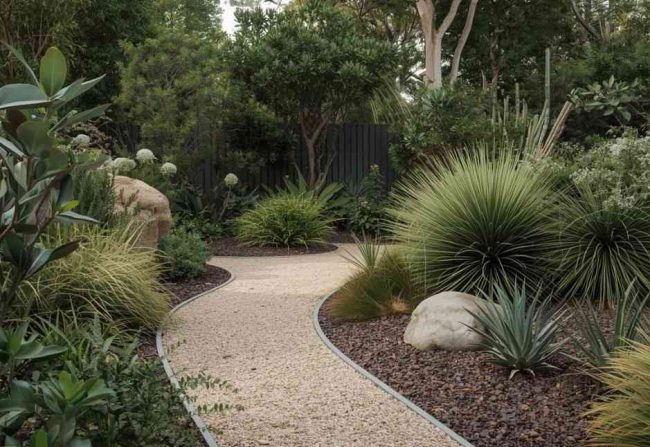
- Native grasses: Kangaroo or weeping grass looks as if it's pouring down a bank, adding movement without wasting any water. Once established, it's tough and low-maintenance.
- Westringia: Coastal rosemary stays looking good all year round, handles the heat brilliantly on minimal water needs, and performs well under coastal conditions too.
- Grevillea: From ground covers to small trees with bright flowers. These plants bring in native birds and give vivid colours without asking for much water.
- Lomandra: Almost impossible to kill and it suits any garden style. Plant it and forget it.
- Agapanthus: Drought-hardy with showy summer flowers. Easily divided for free plants when clumps get too large.
- Ground covers: Native violet for shaded areas and myoporum for coastal spots. Both require far less water than a traditional lawn.
Combine these based on your specific conditions and the look you're after. The beauty of drought-tolerant doesn't mean one-size-fits-all boring.
There are options for every spot in your garden, from full blazing sun to dappled shade.
If you’re not sure what will work best in your particular yard,
Divine Landscapes’ design team can recommend plants that will actually thrive in your specific soil and microclimate conditions.
Design Strategies That Actually Make Sense
Smart design is half the battle with water-wise gardens. It's not just about plant choice — it's about how you arrange everything. Here are the strategies that'll make the most significant difference:
| Strategy |
What It Means |
Why It Works |
| Zone by water needs |
Group thirsty plants together near water sources. Put tough drought warriors in far corners. |
Less hose-dragging, more efficient watering. Your high-maintenance plants get attention while survivors do their thing. |
| Reduce lawn area |
Cut lawn size in half. Replace with drought-tolerant ground covers or decorative stones. |
Lawns are water vampires. You'll still have play space but way lower water usage. |
| Create shade strategically |
Well-placed trees or pergolas reduce evaporation for plants beneath. |
Shade lowers water needs and actually makes outdoor areas usable in the summer instead of a solar oven. |
| Add hardscaping |
Paths, patios, decorative stones, and retaining walls reduce watering areas. |
This results in a smaller area that requires watering while also providing more structure and visual interest. |
A professional landscape construction team can design these features to complement your plants rather than compete with them.
At Divine Landscapes we handle everything from retaining walls to paving, making sure hardscape elements actually work with your water-wise planting plan instead of against it.
The Irrigation Reality Check
Drip irrigation is worth every cent. Sprinklers water everything – plants and paths and weeds and that section of fence that doesn't need to be wet.
Drip systems deliver water right where the plants need it, reducing waste by up to 50% compared to traditional sprinklers.
Timers save you from yourself because you will forget. Let's be honest – you'll forget, or you'll water in the middle of the day when half of it evaporates before even reaching the soil beneath.
An automated system waters during the coolest parts of the day, when plants can actually absorb it properly.
Buried, mulched drip lines look tidy and work efficiently. You can retrofit them into existing gardens too. It's not only for new installations.
Maintenance That Won't Dominate Your Weekends
If you nail the maintenance routine from day one, you won't be stuck out there every Saturday. None of this is rocket science, but get it right, and there's a huge difference in how much time you spend out there.
- Watering deeply and less frequently: The roots will chase the water downward and become strong enough to access moisture way below. Frequent shallow watering develops only weak surface roots.
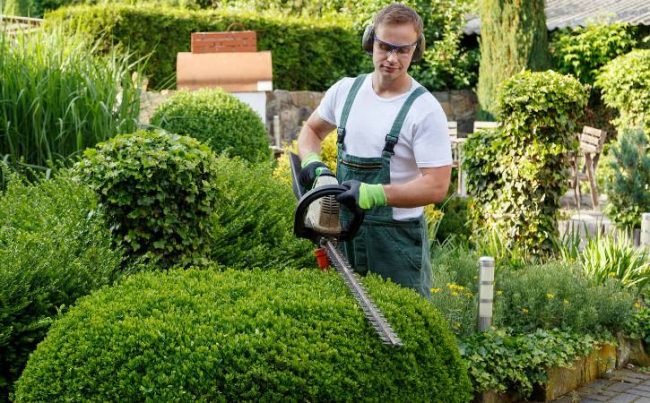
- Do not prune heavily; prune lightly. Over-pruning will cause water-demanding new growth. Light pruning will just maintain the health of the plant.
- Weed when they're small: Weeds also compete for water. Pull them out when they're still small—it takes two minutes. Leave them to grow big and you are in for a battle.
- Feed right: Too much fertiliser (especially nitrogen) creates soft growth that needs more water. Slow-release native formulas work better.
If ongoing maintenance is not something you have time for, garden maintenance services can handle the regular stuff while you focus on actually enjoying your space.
At Divine Landscapes we offer maintenance programmes that keep water-wise gardens looking their best without you having to remember when to fertilise or how much to prune.
Common Mistakes to Actually Avoid
Never assume all natives are drought-hardy. Some Australian plants come from rainforest and creek line habitats – they need constant moisture. Research your specific plants or get professional advice.
Establishment watering is hugely important even to the tough, supposedly drought-tolerant plant species.
They must be watered regularly through their first summer while roots establish themselves – and this is exactly what most people fail to do because they immediately assume the plants are good to go as soon as they have been planted!
Remember microclimates. That west-facing wall is totally blasted by afternoon sun. That shaded corner under the eucalyptus barely gets any direct light at all.
Even within a water-wise framework, these spots need different plant choices. For more hints on setting your garden up for Sydney’s changing conditions, check our guide on
how to weatherproof your yard.
When to Call in the Professionals
Look, not everything's a DIY project. If you're dealing with slopes or drainage issues, significant changes to your property, or getting landscape design, Sydney professionals involved early saves money long-term.
They can notice things you will miss. That barely sloped area that looks okay to you? It could be channelling water away from your planned garden beds.
The spot you've chosen for sun-loving plants? Might get afternoon shade from the neighbour's house that you didn't realise.
Our design team at Divine Landscapes creates water-wise plans factoring in your specific conditions, your lifestyle, how you actually use your outdoor space, and your budget.
They have worked with every soil type and variation of microclimate within Sydney that you could possibly imagine.
For bigger projects, it makes sense to get professional landscape construction. Retaining walls, irrigation systems, paving – these need to be done right the first time.
It actually costs way more to fix botched DIY landscaping than hiring someone who knows what they're doing from the start.
The Long View
Creating a water-wise garden that Sydney locals can be proud of is not about deprivation or making do with less.
It is about choosing plants that thrive in our actual conditions instead of constantly trying to recreate some English garden fantasy that makes no sense in our climate.
Your garden should be a place that reduces your stress instead of adding to it. Once you stop fighting against your environment, that is when gardens become genuinely enjoyable again.
Less time wrestling with hoses gives more time holding onto a cold drink watching low-maintenance plants attracting parrots.
Over time, the financial benefits stack up.
The environmental impact feels good – and honestly? Drought-tolerant plants are often more interesting than the generic stuff everyone else has anyway.
Not sure where to start?
Our team from Divine Landscapes can come out and have a look at your place, suggest the right drought-tolerant plants for your specific conditions, and put together a practical plan that suits both your budget and lifestyle.
We service areas all across Sydney, from Inner West clay soils to sandy Northern Beaches conditions.
Stop fighting against Sydney's climate. Start working with it instead. Your garden – and your water bill – will thank you.